| Rhine/Rhein |
Description to Rhine/Rhein
The Rhine and some of its tributaries, such as the Main, Nahe and Neckar, are of eminent importance, especially in Germany, in terms of viticulture. This is because a large part of the German vineyards in 10 (of 13) directly bordering German wine-growing regions or in the immediate vicinity are located on the sometimes steep slopes of these rivers. The importance of the river is also underlined by the fact that the most important German grape variety, Riesling, is often named Rhine Riesling. Like all bodies of water, the Rhine has a positive effect on viticulture or creates the conditions for it by forming valley slopes. The river, which is 1,233 km long in total, 857 km of which are in Germany, is formed from two headwaters in the canton of Graubünden in the Swiss Alps. After the confluence of the Vorderrhein (77 km) and Hinterrhein (72 km) at the municipality of Tamins-Reichenau, it is called Alpenrhein and flows into Lake Con stance at the municipality of Hard. After passing through the Obersee, it is called Seerhein in the four km long section, flows through the Untersee and is now called Hochrhein after exiting at Stein am Rhein. Up to Basel, this forms the border between Switzerland in the south and Germany in the north.
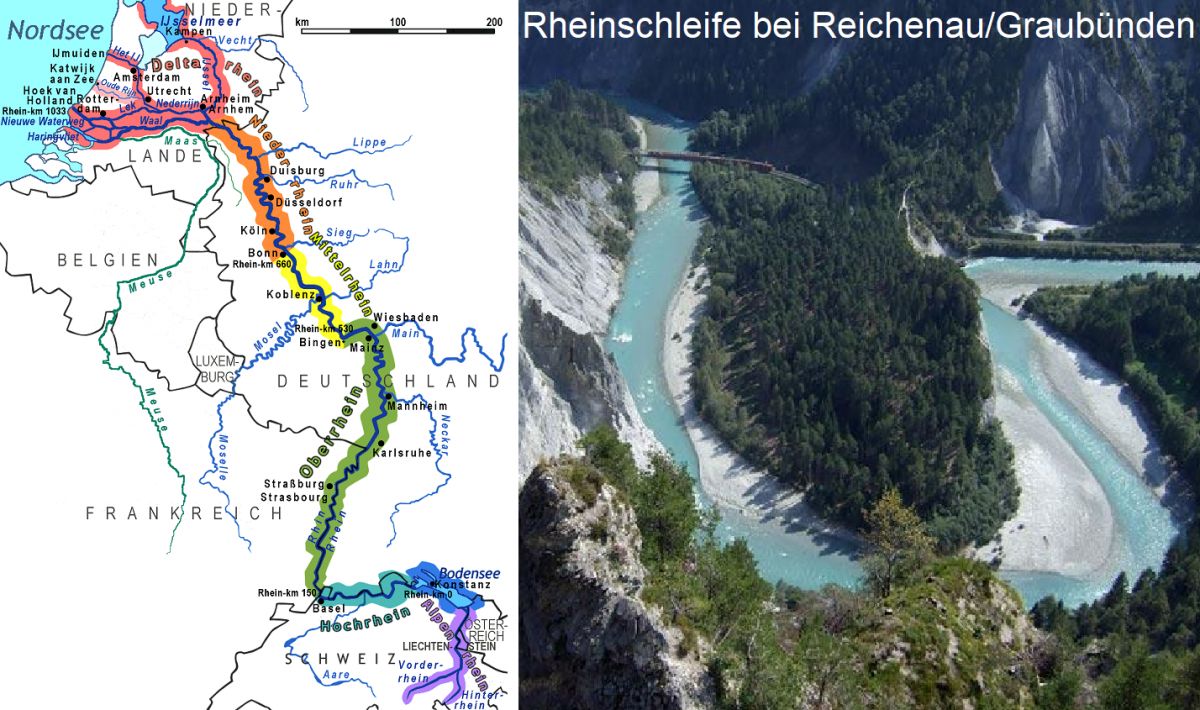
Upper Rhine
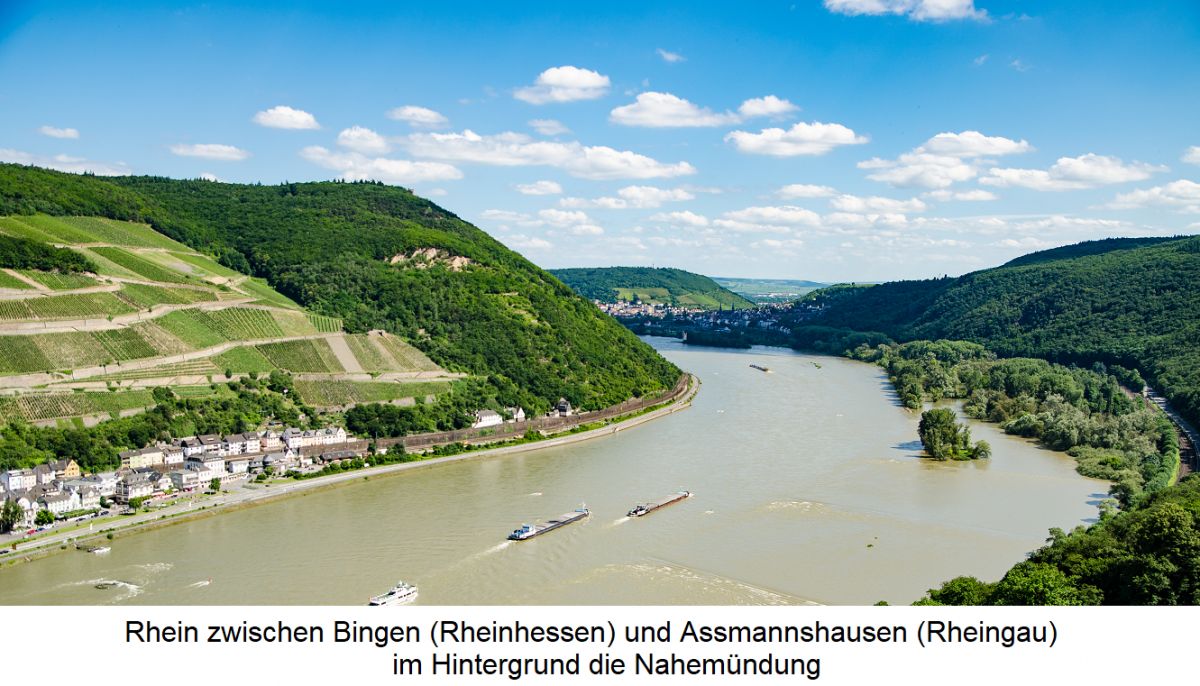
The following section of the Upper Rhine lowlands between Basel at the border triangle (Germany, France, Switzerland) and Bingen, which is about 360 km long, is called the Upper Rhine. The Franconian wine-growing region to the east of the river is crossed by the Main, which flows into the Rhine opposite Mainz, in a large W-shape. To the east of the Upper Rhine, the Baden wine-growing region stretches for 300 km in the Upper Rhine Plain from Lake Constance to Frankfurt am Main. Most of the vineyards of the Württemberg wine-growing region, which borders Baden to the east, are located along the Neckar, which flows into the Rhine near the old university town of Mannheim, and its tributaries. To the west of the Rhine knee near Wiesbaden, north of Bingen, lies a narrow strip of the Rheingau wine-growing region. Just below it, to the west of the Rhine, is Germany's largest wine-growing region, Rheinhessen. To the south lies the Pfalz wine-growing region with its easternmost vineyards close to the Rhine. At the bend in the Rhine after Bingen, the Nahe flows into the Rhine, giving its name to the growing region bordering Rheinhessen to the west. The mouth of the Nahe separates the Upper Rhine from the Middle Rhine.
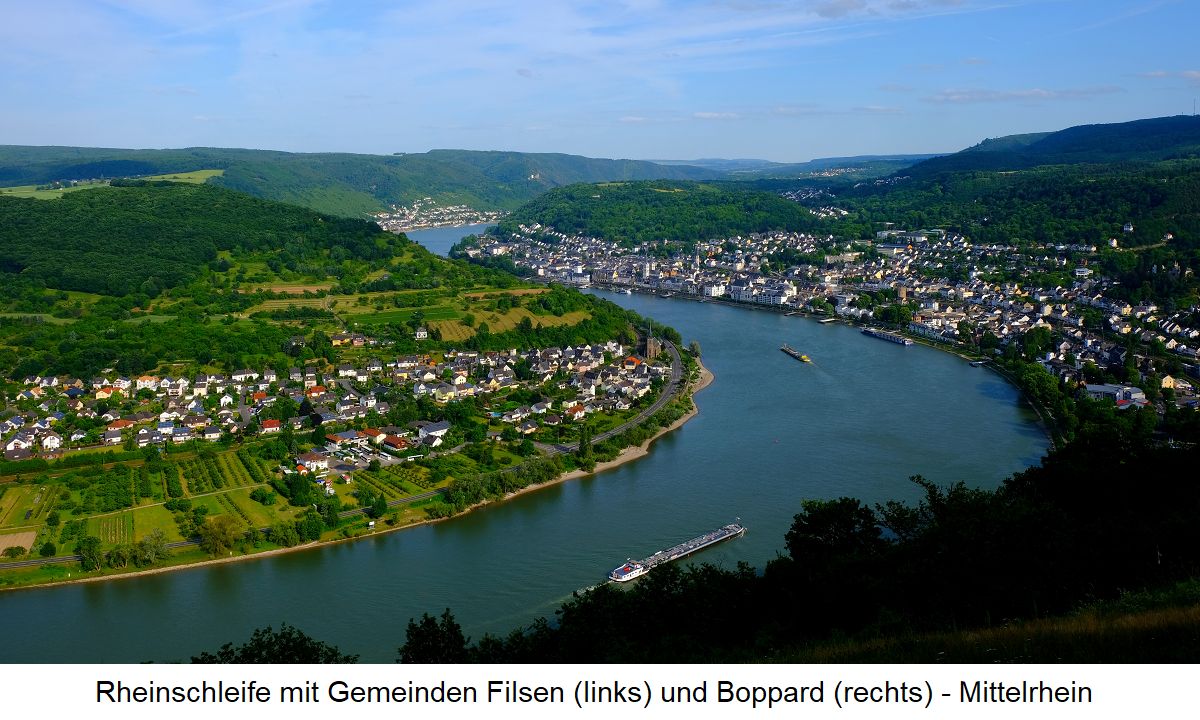
Middle Rhine, Lower Rhine and Rhine-Meuse Delta
The 130 km long section of the Middle Rhine stretches from Bingen and Rüdesheim on the Rhine in the south to Bonn-Bad Godesberg in the north. At Koblenz, the Moselle flows in, giving its name to the wine-growing region to the west of the Rhine. North of this is the Ahr wine-growing region, also named after a tributary. Largely identical to the geographical region is the small wine-growing area of the Middle Rhine. Here, on the right bank of the Rhine, there are the tributaries Lahn, Wied and Sieg. The last section from Bonn is called the Lower Rhine (Nederrijn). At the Dutch-German state border, the Rhine divides to form the extensive Rhine-Meuse delta (also known as the Rhine-Meuse-Scheldt delta). This is the joint estuary area of the rivers Rhine (with the three main branches Waal-Boven, Nederrijn-Lek and IJssel), Meuse and Scheldt into the North Sea.
Map: From Ulamm - Rhine map by Daniel Ullrich, CC BY-SA 3.0, Link
Vorderrhein: By Biovit - Own work, CC BY-SA 3.0, Link
Recent wines 84
 Weingut Riffel
— Rhine/Rhein
2015 Silvaner Landwein trocken Réserve
24.50 €
Weingut Riffel
— Rhine/Rhein
2015 Silvaner Landwein trocken Réserve
24.50 €

 Weingut Schätzel
— Rhine/Rhein
2022 Landwein VDP.Gutswein "naturweiss"
86 WP
very good
14.00 €
Weingut Schätzel
— Rhine/Rhein
2022 Landwein VDP.Gutswein "naturweiss"
86 WP
very good
14.00 €
 Weingut Schätzel
— Rhine/Rhein
Riesling Landwein "Steiner 17-22"
86 WP
very good
24.00 €
Weingut Schätzel
— Rhine/Rhein
Riesling Landwein "Steiner 17-22"
86 WP
very good
24.00 €
 Weingut Schätzel
— Rhine/Rhein
2020 Riesling Landwein "Fuchs"
87 WP
very good
60.00 €
Weingut Schätzel
— Rhine/Rhein
2020 Riesling Landwein "Fuchs"
87 WP
very good
60.00 €
The most important grape varieties
More information in the magazine
- The two unstoppables Blaufränkisch from Austria and Germany in comparison
- Our wine tips for the barbecue: From the Wachau to the Priorat Currently tasted
- No elegance without power Tasting: German Pinot Noir
- Spoilt for choice White Pinot varieties
- The paradoxical year Riesling 2022
- Paradisiacal times! Tasting: European sparkling wines for the festive season
- The indestructible Tasting: Silvaner 2022
- Winery Escher Discovery of the Year 2022 - Württemberg
- Winery Aldinger Collection of the Year 2022 - Württemberg
- Winery Heiligenblut Discovery of the Year 2022 - Rheinhessen