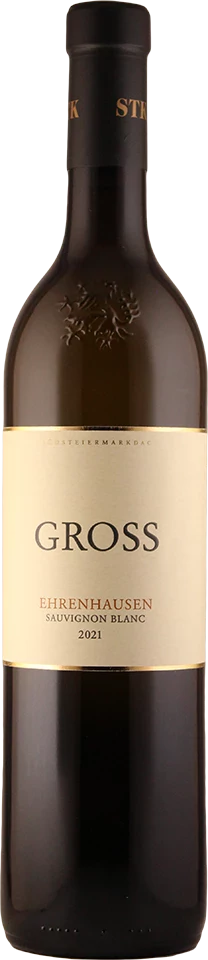
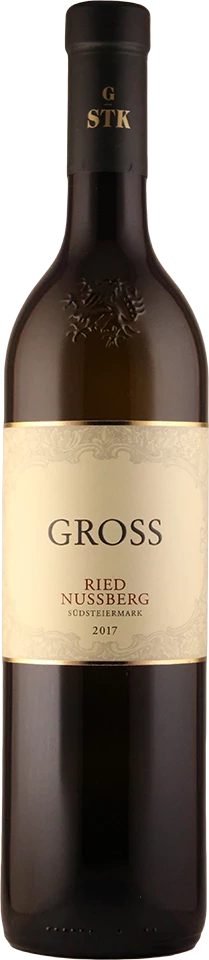
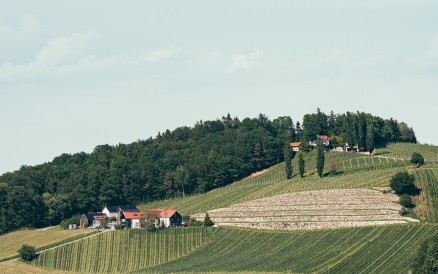
The winery is located in the municipality of Ratsch on the Ratscher Nussberg near the border to Slovenia in the wine-growing region of southern Styria (Austria). Viticulture has been practised in the traditional family since 1907. From 1984 onwards, the winery was run by Alois Gross, and since 2006 the two sons Johannes and Michael have been in charge of the winery in the fifth generation. In 1995, a new wine cellar was opened on the Nussberg in the middle of the vineyards, where the office, presentation and sales rooms have also been located since mid-2002.
The vineyards cover 50 hectares of vineyards in the communities of Gamlitz, Kittenberg and Ratsch at 300 to 500 metres above sea level with the vineyards Nussberg (Große STK Lage), Perz, Sulz, Kittenberg (all Erste STK Lage) with slopes up to 85%. As a special feature, there is also a small vineyard just over the border in Slovenia. This is 0.3 hectares on the Witscheiner Herrenberg (Witschein municipality, slow. Svencina). This area belonged to Austria-Hungary during the Habsburg monarchy until 1918. Here, the family's ancestors began winegrowing in 1907, which Heinrich Gross founded with the purchase of a vineyard. Thanks to the Gleichenberg Agreement of 1953, the wines can be marketed as Austrian quality wines.
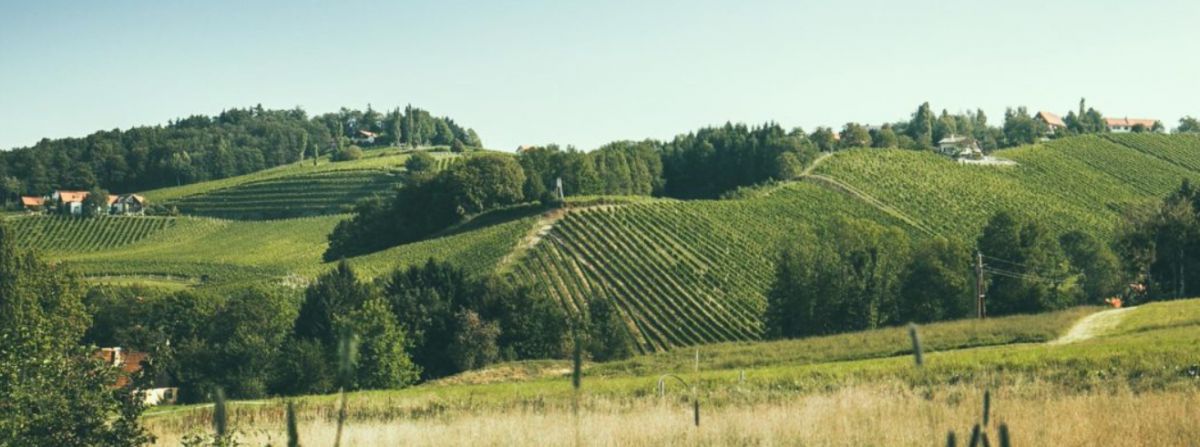
The white wine varieties Sauvignon Blanc, Morillon, Welschriesling, Gelber Muskateller, Weißburgunder (Pinot Blanc), Grauburgunder (Pinot Gris), Furmint, Riesling, Sämling 88 (Scheurebe) and Gewürztraminer, as well as the red wine variety Zweigelt are processed to 95%. The vineyards are cultivated exclusively by hand according to ecological principles. This includes fertilisation with home-made compost and the renunciation of herbicides, insecticides and fungicides (botryticides). Quality criteria in the vineyard are strict yield reduction, gentle manual harvesting and processing of the grapes according to variety.
Depending on the type of wine, the wines are matured in stainless steel tanks, in large wooden bar rels or in barriques. The three-part pyramid of origin illustrates the philosophy of the winery. It is divided into Südsteirische Gebietsweine (with the Steirische Klassik STK) with fresh, fruity wines; the Ortsweine (local wines) with at least eight months of ageing and, as a premium line, the Lagenweine (site wines) from special vineyards with a favoured microclimate. The winery is a member of Tu Felix Austria and a founding member of the Styrian Terroir & Classic Wine Estates. In Gorca, about 60 kilometres south of the border, the Gross family in Slovenia runs Vino Gross as a second winery.