The history of the famous family is inseparably linked to the history of German quality viticulture. The ancestors were outstanding winegrowers, art connoisseurs, wine experts and actively involved in political life as mayors, members of parliament and as wine book authors. The origin is the Ketschauerhof, which was already mentioned in 1250. In 1783, Johann Peter Jordan (whose father had immigrated from Savoy in 1708) built an estate with a winery in Deidesheim, north of Neustadt an der Weinstraße, which has remained the centre of the estate to this day. Andreas Jordan (1775-1848) is considered the founder of the winery and also of quality winegrowing in the Palatinate. He bought the Ketschauerhof together with some of the best vineyards. A letter from this time has been preserved in which J. W. von Goethe (1749-1832) ordered the 1811 wine, which he often praised and called Comet wine, from the Bassermann estate in 1820 for a stay at a health resort.
Conversion to high-quality grape varieties (Riesling)
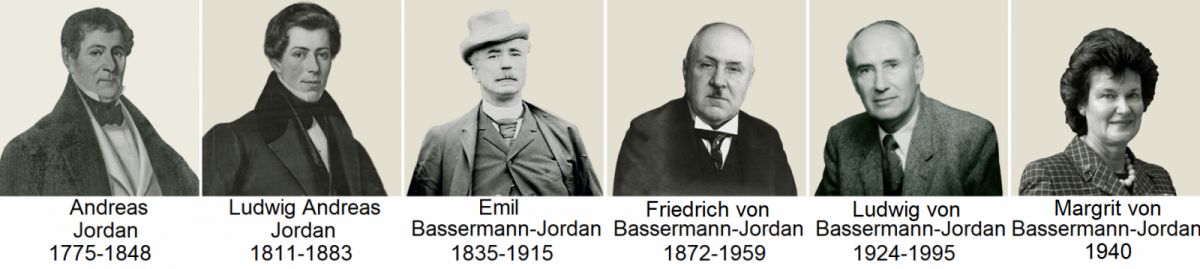
Andreas Jordan attached great importance to the planting of only high-quality grape varieties, especially Riesling, and to a more careful separation of the growths than was the case with the Gemischter Satz, which was common at the time. Worth mentioning are the extensive improvements to the vineyards by turning north-facing slopes into south-facing slopes with large earth movements, artificially raising south-facing slopes and draining many sites. He was followed by his son Ludwig Andreas Jordan (1811-1883), who continued the tradition and caused a sensation with his 1852 wines. His successor was his son-in-law Emil Bassermann-Jordan (1835-1915). His brother Otto was a friend and publisher of Wilhelm Busch (1832-1912), who wrote to him: "The Deidesheimer is a real treat for me - but - only 17 bottles left. I think you can get me, your nobility unharmed, a batch for a fee. Only soon - God willing - I will come in autumn and look forward to it".
Pioneer Friedrich von Bassermann-Jordan
This was followed by Ludwig von Bassermann-Jordan (1869-1914) and Dr. jur. Friedrich von Bassermann-Jordan(1872-1959), who jointly managed the business. The latter published his book "The History of Viticulture" in three volumes in 1907, which is still considered a standard work today. He went on to publish countless other wine-historical works, became an internationally recognised authority as a wine historian, exerted a decisive influence on the entire German winegrowing industry for decades and received numerous honours and titles, for example president of the Bavarian Winegrowers' Association and vice-president of the German Winegrowers' Association (DWV). Friedrich von Bassermann-Jordan also significantly influenced the first German wine law. On the occasion of his 85th birthday, the DLG (German Agricultural Society) donated the "Friedrich v. Bassermann-Jordan Medal", which is awarded to a maximum of ten living personalities who have rendered "outstanding services to the German wine industry".
Vineyard
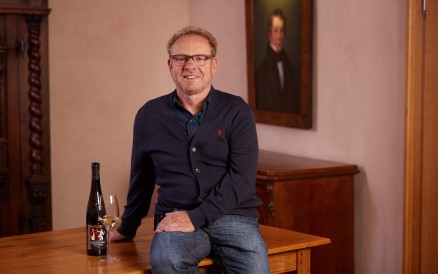
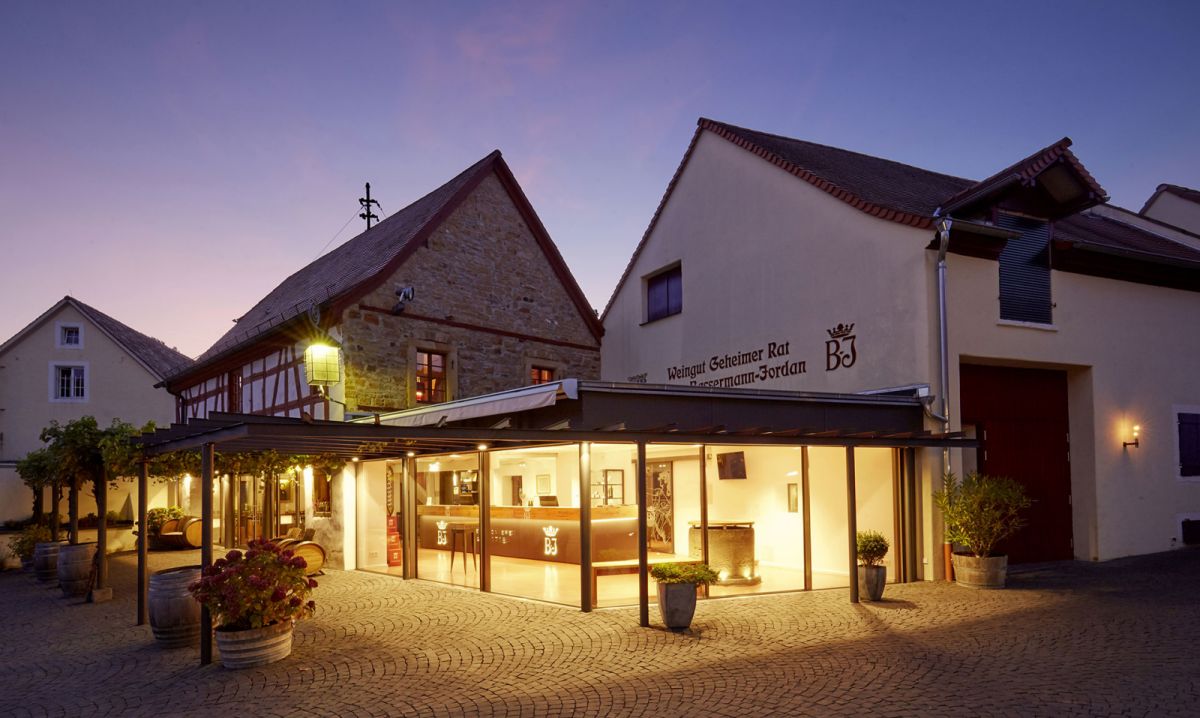
His son Ludwig von Bassermann-Jordan (1924-1995) managed the vineyard from 1959 and particularly promoted the training of winegrowing specialists. After his death, his widow Margrit von Bassermann-Jordan (*1940) took over the management. In 2002, the winery was sold to the Neustadt entrepreneur Achim Niederberger. After his death in 2013, the winery is managed by Jana Niederberger together with Ulrich Mell (technical manager since 1997) and Gunther Hauck (commercial manager since 1998). The winery comprises 50 hectares of vineyards in the single vineyard sites Grainhübel, Herrgottsacker, Hohenmorgen, Kalkofen, Kieselberg, Langenmorgen, Leinhöhle, Mäushöhle, Paradiesgarten (Deidesheim), Hoheburg, Reiterpfad, Spieß (Ruppertsberg), as well as Freundstück, Jesuitengarten, Kirchenstück, Pechstein, Stift, Ungeheuer with Gewann Ziegler (Forst). They are planted with the white wine varieties Riesling (90%), Chardonnay, Weißer Burgunder (Pinot Blanc) and Grauer Burgunder (Pinot Gris), as well as the red wine varieties Spätburgunder (Pinot Noir) and Merlot.
Wine cellar
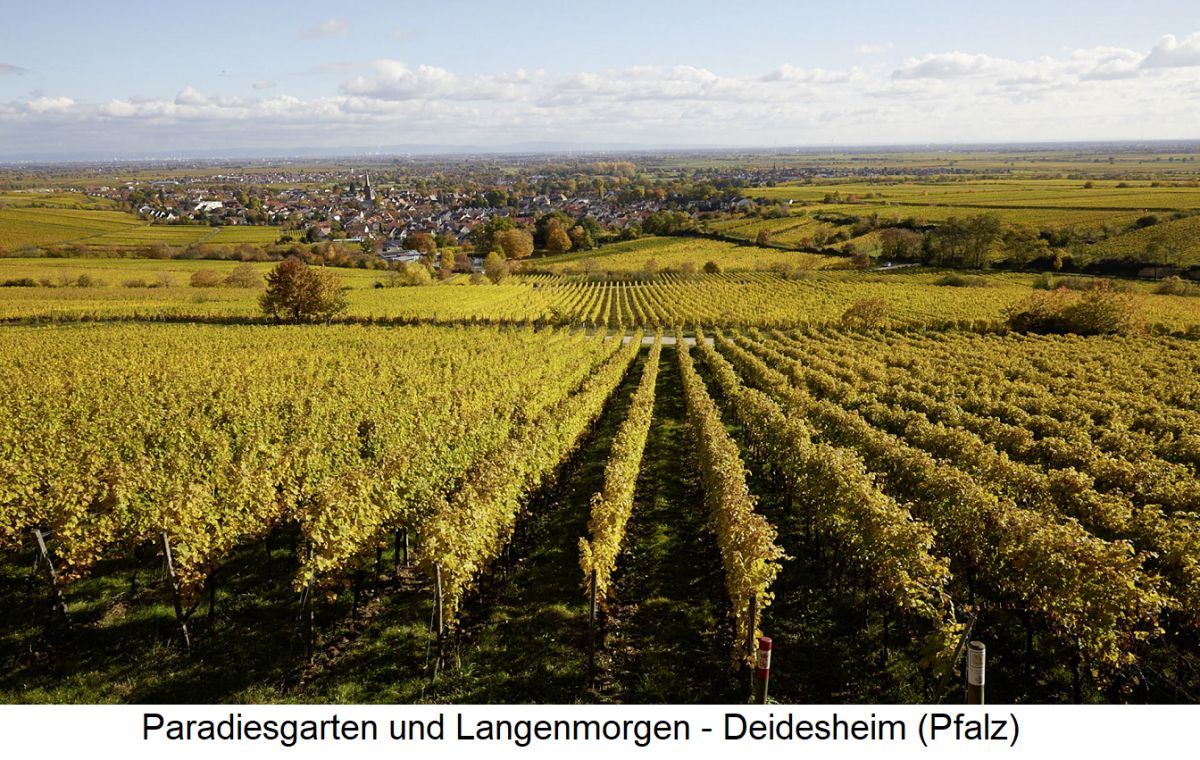
The cellar of the winery has a special position, as a wine museum with countless, most valuable artefacts has been created here over the centuries. It contains Roman amphorae from the 1st to the 3rd century, tin bottles from the time of the Thirty Years' War, a 1706 wine, one of the legendary 1811 Forster Ungeheuer as well as all vintages since the 1880s without a gap. The wines in the private collection are not for sale.
Ancestry: Winery Privy Councillor Dr. von Bassermann-Jordan
Building: fotocredit by hans georg merkel fotografie